DevOps and artificial intelligence integration began recently. Nevertheless, it brought a huge leap in proactive development security. DevSecOps combines the best security practices with DevOps. Several AI tools for DevOps are helping drive this approach forward.
Success in DevSecOps relies on developers’ understanding of implementation methods and the role of AI throughout the process. This approach helps detect and respond to threats in real time. It lets developers manage vulnerabilities and incidents throughout the software development lifecycle. AI integration in this process is critical for a dynamic security approach. In this article, we’ll discuss Integrating AI-Driven DevSecOps Tools for Proactive Security.
What does DevSecOps Mean?
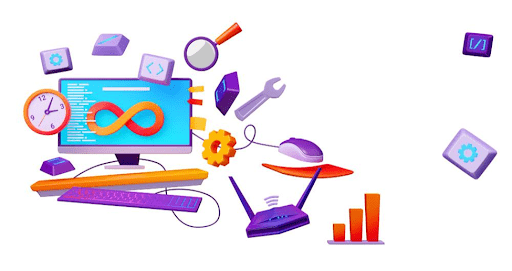
DevSecOps means integrating security into every phase of software development. In the past, DevOps experts included security checks after development was complete. This meant issues would only be detected after the entire development process was complete. Sometimes, developers had to redo the entire work due to serious security issues.
Security integration in every step of software development is critical. This is made possible by DevSecOps tools. Developers use many DevSecOps tools and open-source frameworks for tailor-made solutions. These tools provide enhanced security best practices. These unique applications make up the majority of the DevSecOps toolchain and are tied to specialised technologies.
They help developers manage and secure apps throughout development. Teams that use these DevSecOps tools perform seamlessly to automate security scans. They automatically detect vulnerabilities in every development aspect. These tools save more money and time. They provide detailed development security within the framework.
The introduction of AI in DevSecOps changed everything. It helped include security measures from the start. The teams included security during planning, code design, and software development. They extended this security to launch and software maintenance, empowering them to detect and fix security issues throughout the phases.
Also Read: What is the Importance of Web Development?
The goals of DevOps and artificial intelligence are to scale processes. It speeds up deployment and automates the entire process. AI in DevOps encompasses fields such as machine learning and deep learning. Integrating AI in DevOps requires systematic processes. You can hire an AI consulting company to get more information on how to implement AI in DevOps for enhanced security.
Analyse Your Current DevSecOps Infrastructure
Before you integrate AI in DevSecOps, understand the DevOps framework you already have. Analyse the entire framework to understand the tools in use. Know processes currently in use. Understand your team’s workflows and the perfect way to integrate AI. Consult with your team to identify available areas for integrating AI tools into DevOps.
Create a Plan for using AI in DevOps.
After identifying the integration areas that need improvement, create your AI integration plan. This plan outlines the steps you will follow to incorporate AI into DevSecOps. Your team may take a full-scale or phased strategy. Plan to integrate resources, such as IT experts and training. Create a timeline for implementation completion.
Identify the Right DevSecOps AI Tools
Agree with your team on the right tools to choose. Review several tools with your team to determine their capabilities and compatibility. Review their security strengths and incident response capabilities. Compatibility should include working well with your CI/CD pipelines.
Onboard the Tools and Configure
Launch the tools into your system and configure them. Test them to ensure they are working to their best. Test performance and security when running on your DevSecOps system. Test their automation capabilities and ability to respond to incidents. Make adjustments based on the needs.
Onboard your Team and Train
Ensure your team can use the tools effectively and improve productivity. They should use the tools to boost proactive security measures. There are many training programs you can use to train your team. Provide documented resources or step-by-step guides for the team. Follow up during use to determine training gaps and fill them.
Monitor and Optimise the System
Monitor the system closely to determine its effectiveness. Check configuration and security errors in the system. Reconfigure where necessary or add extra security layers. You can create metrics to measure performance and reliability. Optimise the system consistently and keep improving it. Get feedback from the team and update regularly.
How AI-driven DevSecOps Tools Benefit Developers?
- Provides automated testing. Teams enjoy automated testing scenarios and results.
- Enhances efficiency in the development workflow.
- Boosts system and app security.
- Enhances team cohesiveness and collaboration.
- Allows quick code development, testing, and bug detection.
- Allow teams to continuously improve security and development workflows.
Also Read: Advanced SEO Strategies with AI Translation for Multilingual Websites
Popular AI-Driven DevSecOps Tools for Developers
AI-driven DevSecOps tools are more popular today than ever. These tools are driven by artificial intelligence and work to accelerate development, making it safer and more efficient, largely thanks to the quality of the training data that powers their algorithms. Developers use them to automate tasks, detect and fix errors, and build robust, secure applications for organisations. There are many apps that developers can choose from. Here are some of the popular ones.
Contrast Security
The goal of Contrast Security is to identify threats and block them. It provides real-time security and continuous security testing. This tool monitors web apps and APIs connected to the system. It manages and resolves issues to ensure apps run securely. It is integrated into a project to provide real-time detection, analysis, and prevention.
Darktrace
Darktrace is integrated into DevSecOps to detect and prevent attacks. It uses machine learning for self-learning and adaptation to dynamic threats. It scans the development infrastructure automatically. The platform provides a visual map of the system’s areas.
Threat Stack
Threat Stack is a cloud-based tool for detecting threats in DevSecOps. It ensures systems comply with cloud and infrastructure requirements. The platform detects intruders and responds to breaches in real-time. It manages vulnerabilities and pinpoints weaknesses in the development system. The tool checks if the system complies with development ecosystem requirements.
ExtraHop
ExtraHop detects and responds to network threats. It provides developers with security visibility of the entire system. The platform uses Machine Learning to learn from data and respond accordingly. It takes proactive detection and prevention measures. The data helps the platform detect patterns and activities that could cause breaches.
Snyk
Snyk is an open-source tool for DevSecOps development and testing. It lets users and development experts add certain features to the app. These features improve its efficiency and security. It is built to detect and fix weaknesses in the system. The platform uses AI for automated testing. It can be integrated with several development and monitoring tools. The tool provides teams with continuous monitoring. It makes the process smooth and swift.
Also Read: AI Chatbots for Personalised Marketing and Customer Engagement
Conclusion
Using AI for DevSecOps security enhancement requires an elaborate plan. Organisations can adopt a phased or full-scale implementation approach. Analyse your DevSecOps environment to determine the needs. Choose the right tools and follow an implementation plan. Including security considerations in your DevOps practices strengthens protection for your projects.