DNS plays a crucial role in allowing the browser to get desired websites and/or other webpages by changing the name of domains and associating them with an IP address, providing seamless surfing through the vast domains of the internet. It can also be said that it ensures that browsing through the internet not only works as smoothly but also ensures that it is user-friendly, alongside loading whatever content we ask for in a quick yet efficient manner.
It is also derived that the Domain Name System somewhat shares a similarity with the phone book because it incorporates the name of the domain and associates it with an IP address, which mostly comprises a string made of a combination of random numerals.
3 renowned types of Domain Name System servers comprise the following:-
- Primary
- Secondary
- Cache
Taking an article published on the DNS by MS into consideration, there are about 3 different ways in which the servers are to behave to generate a response when entering a query.
- Returning the names or data relevant to IP resolution.
- It can also return a pointer to a different server that can help in solving the raised query.
- They can also indicate that it does not have any resources in relation to the context of the input query.
What is Meant by DNS? Getting to Know DNS
- Its main function can be derived as the process of compiling human-readable language to a computer-readable language or URL for computers, services relevant to the computer, or any resources that are online on a public or private network, regardless of their type. It’s a graded and decentralised system where the user has the authority and not the regulator assigned by the system.
- The principal concept behind this term, a graded decentralised system, is inclined to denote the Domain Name System, which is a Stratified and decentralised system that prioritises based on the standings of a website or webpage. As mentioned earlier, Domain Name System is a stratified system that has authorisation for its own total of 10+ servers, which are present across the entire globe.
What is Caching in Terms of DNS?
- As this question arises, a Domain Name System cache is a type of storage-circumscribed system that tends to contain all records of the computer’s memory of queries that were input. With that, it also keeps an account of the latest websites that have been visited. It can be said more subtly, and derive cache related to Domain Name System can be defined as a collection that consists of the name of the domain, which is a written form of verbal nomenclature much simpler to understand by us humans in a very efficient way which is convenient for recalling at any point in time, into a string of random numbers that is easier for the system to identify and execute quicker in the foreseeable future.
- In parallel to the above procedure, the operating system intends to use a cache formed to store the resources that are related to DNS to reduce the redundancy when attempting to get access to a webpage on the internet, that is resulting in a reduction of the DNS’s seeking latency.
- The term DNS Latency explicates the period of time in which the data can reach its particular destination and return to its origin. It is often preferred to be very low latency so as get information in a jiffy. Latency here is very similar to that of the latency/ping witnessed while playing certain games online, in particular, the ones in which there is more than one player in the playing area. It is seen in renowned Battle Royale games that take the majority of big names like PUBG/BGMI or Fortnite into this landscape.
- The concept behind it is simple: how fast the information pack will traverse from point A to Point B. It doesn’t have any sort of Rocket science in understanding a concept of simple physics, which is “that any object or a packet of information will only traverse at a speed of light or less.” As of now, considering the present-day technological advancements, the term physical transportation is still a fictional term as we are nowhere near inventing it, in case if it were present in today’s world, then the term latency would just become a thing of the past, and travel from one point to the other would be instantaneously regardless of its state being either a physical object or a pack of info.
Also Read: Best Web Hosting Provider Companies
Domain Name System and Frequently Asked Questions
DNS Servers and Frequently Asked Questions
DNS Servers are the backbone responsible for grasping a user’s query as input and associating its IP as output. When the initiation takes place to input a URL of any type in the search engine, DNS queries your ISP; in simpler terms, it queries your Internet Service Provider.
Moving forward, the DNS starts by generating queries as input to the ISP’s DNS server. Adding to that, it then queries another server and repeats the process until it finds a reliable answer that can be executed as an output to the initiated query. If, by any chance, the ISP is unable to/does not grant you the default DNS Credentials, then there are ways to reset the DNS credentials/settings in your system, and it can be done manually.
Defining the main Objective of DNS
It is the flow of processes in which the internet lends a hand, guiding the computer in order to access a site/webpage or any relevant resources that share similar traits the user is looking for. There are browsers similar to Chrome that come with an in-built DNS that has become vital so as to guide the computer to give an output content that shares similarities and is relevant to the initiated input when looking for it online.
Illustration to Better Understand the DNS
An analogy to understand the System’s Concept is based on a phonebook. When one intends to search a certain person’s contact number, it gets difficult to remember all of their information, and here is where the phonebook comes into play; when typing in a person’s name to contact, it displays all relevant details and their phone numbers that are associated with their name.
Defining Third-Level Domain Name
Third Level Domain Name is directly relevant tothe a main domain name. Third Level Domin name can also be derived as sub domainer name or as a canonical name which was derived and provided in the DNS server by the website’s Host. Sub-Domainer is an unregistered entity, as it is associated with an existing Domain name that was in existence before deriving the term Third Level Domain Name.
Troubleshooting Domain Name System
Everything manmade is not all out perfect. The same is derived for the Domain Name System. At times, the Domain Name System is inclined to show some minor errors. The obvious reason behind the recurring occurrence of these errors is related to the network connection.
List of Root Problems Troubleshooting for DNS
- Keeping your Ethernet Cables and/or Internet Connection In Check
- Reestablishing the LAN or Wi-Fi Router
- Recurrent Scans for Malware and Virus
- Recurring Checks for the website, be it yours or anyone else’s.
If any one of these troubleshooting methods has resolved any Problem you were facing, then give yourself a thumbs up!
Troubleshooting Advanced DNS Issues
Not everything goes as planned, so just in case, if the above-mentioned tactics for troubleshooting do not seem to work out for the resolution of the Domain Name System issues faced by the user’s side, this is not the end. There is still hope to get out of quicksand. Here’s where advanced troubleshooting will help you get out of this problematic quicksand, considering DNS.
Also Read: XResolver – What it is, Why It Matters & Best Alternatives
6 Tactics to Troubleshoot the In-depth Domain Name System Problem
It is a tedious flow of procedure as the resolution for the issues faced is done through thorough DNS troubleshooting.
Checking and following a standardised set of rules that allows your system to communicate through any network, and the ideal choice to do so is the Internet.
- Emptying your DNS cache: DNS cache is the storage space where your computer tends to store pieces of networking information, such as:-
- Recent and/or Frequent Website/Webpage Visits
- Number of attempts to connect to a certain web domain
- Renewing your Domain name: In some cases, the main issues cause you to redirect to other web pages, regardless of whether your web address is working. It is possible that the renewal of your domain name may be pending.
- Some Recurrent Causes That Give Rise to DNS Issues
- TTL(Time To Live): It is generally preferred to keep your TTLs lower when updating your records frequently. Higher TTLs are preferred to keep records steady and in place. There are times when TTLs are as long as a day; this is because some data has very rare changes in it.
- DNS Latency: Here, latency refers to the time taken for the information packet to travel from its source to the destination. It is common to witness people saying that the internet is working more slowly. This is simply because the distance to be covered by the data you seek can affect your network speed, resulting in high latency.
- Distributed Denial of Service: DDoS is an activity that is considered a malicious crime by the Feds. This tactic is planned and intended to disrupt sites and domains meant for users, yet they are targeted by hackers and cybercriminals as an act of cybercrime. A DDoS attack generates a flood of internet traffic that results in denying access to any users. It cannot be prevented but can be resolved by getting in touch with the Web host and requesting a new IP. With that, you will have to get rid of all past logs and ensure all upcoming accounts are now relocated to the new IP.
Flushing Domain Name System
What is meant by flushing the Domain Name System Cache?
- To flush the DNS cache means to delete all IP addresses and miscellaneous DNS records from the system’s cache.
How can Flushing the Domain Name System Cache Help?
- The process of flushing your Domain Name System cache helps to resolve the following:-
- Web and Device Security
- Seamless Internet Connectivity
- Maintain Site Access
Why should you flush the Domain Name System cache?
- The Process of flushing the DNS cache is to maintain your access to the website. It also helps in overcoming the frequency of getting logged into older versions of the websites. Web connectivity can also be improved when flushing the cache.
Steps to Clear Your DNS Cache
Windows
- By following these steps, you can clear your DNS cache when intending to clear on the Windows Operating System.
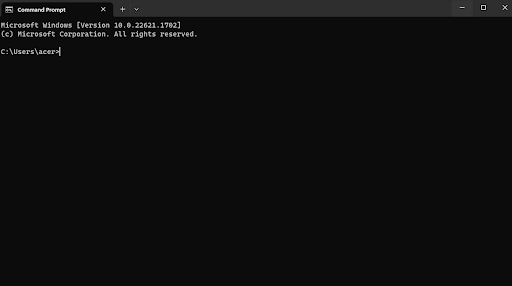
- Firstly, open the Search Bar present in your taskbar
- Type in cmd, which stands for Command Prompt, and press Enter
- By doing so, you will get a black window on your screen, similar to the picture below
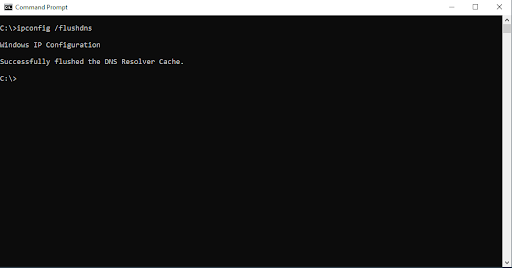
- When the black window is opened, type in the particular code flawlessly-> C:\>ipconfig /flushdns
- Furthermore, you will receive an output Similar to “Successfully flushed the DNS Resolver Cache”
Safari
- By following the given steps, you will be able to clear your DNS cache for the Safari Browser.
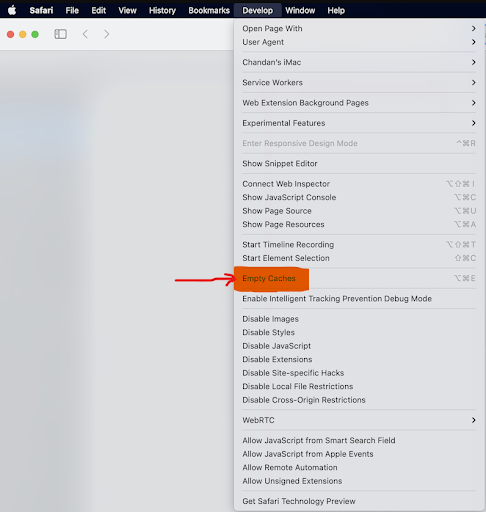
- First of all, the Safari Browser consists of certain special features that can clear many kinds of caches, including the DNS option from its menu bar. But it requires you to enable the Develop menu.
- Start By Opening the Safari Menu
- Click on Preferences and open the Preferences drop-down menu
- Now Click on the Advanced tab
- Then Look for the Show Develop Menu in the Menu Bar
- Now you should be able to see the option, Develop, in the menu bar of Safari.
- By clicking on the Develop Menu, select the Option that says Empty Caches option to clear the browser’s cache, including all caches relevant to DNS.
Chrome
- Follow the step-by-step process To Flush the DNS cache in Chrome Browser.
- Starting By Opening Chrome Browser on your system.
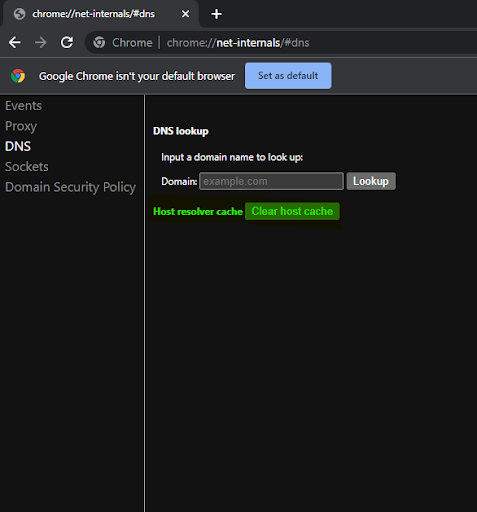
- Look for a new tab and type the URL given without any flaws: “chrome://net-internals/#dns”
- Now press Enter after inserting the URL in the search bar.
- By pasting the URL, you can see a tab “Clear Host Cache” on the directed page
- After clicking on the Clear Host Cache, it will clear the browser’s DNS cache
Firefox
- Follow these easy Steps to clear the DNS cache from your Firefox browser.
- For the first step Open Mozilla Firefox Browser
- Open a New Tab to proceed further
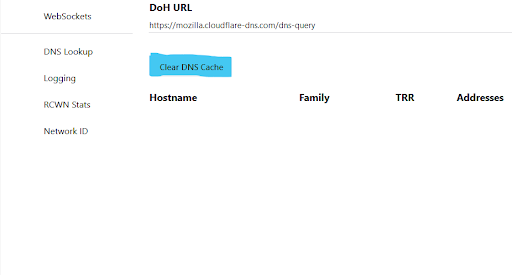
- Type in the search bar “about: networking#dns” without any changes and Press Enter
- You will be directed to a page that will show you DNS cache details.
- There will be an interactive Button labeled “Clear DNS Cache”
- By clicking on the Button labeled as Clear DNS Cache, your Browser’s DNS cache will be cleared.
Also Read: Best VPNs for Speed & Security
Conclusion
As we have gone through all the things that cover how to clear your DNS cache in your system, which includes Different Browsers and Operating Systems. Flushing your DNS caches might sound like a tedious process, yet it is not at all how it sounds. In many cases Flushing your DNS caches ought to increase user security, privacy, and browsing history when in a public network or infrastructure. Flushing the DNS cache proves to be a big help for troubleshooting issues that are related to connectivity, as well as DNS resolution, to overcome old and/or outdated caches.