ChatGPT, the chatbot OpenAI released as a free research preview on 30 November 2022, went viral within days because its answers sounded far more human than any chatbot before it. Developers showed it explaining and fixing code, writers had it draft poems, and some commentators predicted the end of Google search. This page looks back at what ChatGPT could and couldn’t do at launch, and what that launch still means for a business that wants to be found online.
The first reactions came from programmers on X (formerly Twitter). Three of the posts that spread fastest are below.
I’m sorry, I simply cannot be cynical about a technology that can accomplish this. pic.twitter.com/yjlY72eZ0m
Thomas H. Ptacek (@tqbf) December 2, 2022
ChatGPT could be a good debugging companion; it not only explains the bug but fixes it and explains the fix pic.twitter.com/5x9n66pVqj
Amjad Masad ⠕ (@amasad) November 30, 2022
What ChatGPT was when it launched
ChatGPT launched as a chatbot built on a model from OpenAI’s GPT-3.5 series and fine-tuned for conversation, according to OpenAI’s launch announcement. The dialogue format let it answer follow-up questions, admit mistakes, challenge wrong premises and turn down inappropriate requests.
OpenAI trained ChatGPT with reinforcement learning from human feedback (RLHF): people ranked the model’s answers, and those rankings taught it which replies to prefer. Earlier language models were easy to push into writing false or hateful text, and RLHF was OpenAI’s main defence against that.
ChatGPT was dropped on us just a bit over 24 hours ago. It’s like you wake up to the news of first nuclear explosion and you don’t know yet what to think about it, but you know the world will never be the same again. Here are some interesting snapshots of this “explosion”:
Shital Shah (@sytelus) December 2, 2022
Shital Shah’s full thread on X collects dozens more examples from those first days.
The excitement went far. TechCrunch argued that ChatGPT’s user experience and implementation should have Google scared. OpenAI tried to keep expectations lower, and Sam Altman, OpenAI’s CEO, stressed that it was an early version with limitations.
The biggest limitation was one OpenAI named itself: ChatGPT sometimes wrote plausible-sounding answers that were wrong or nonsensical.
A language model only knows what its training data contains. Gaps and errors in that data come out in the answers, stated just as confidently as the correct ones.
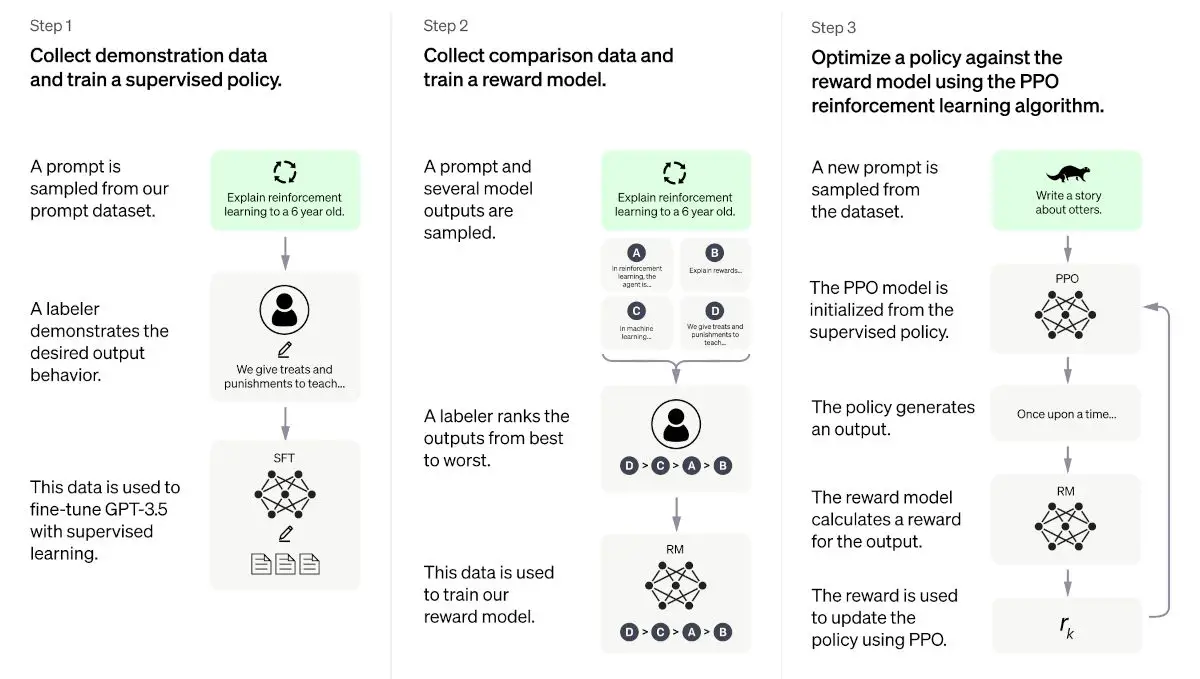
How users tricked ChatGPT’s safeguards
ChatGPT’s safeguards were easy to get around in the first weeks after launch. The model refused to explain how to harm people, but framing the request as research for a novel was often enough, and one user got it to describe how to commit a murder.
Other tricks were harmless and showed how flexible the model was. Users had ChatGPT act as a Linux terminal, answering typed commands as if a real computer were running.
The lesson for anyone using ChatGPT at work still holds. Guardrails are a filter, not a guarantee, so check anything it writes before you publish it or act on it.
Can you still try ChatGPT for free?
Yes. ChatGPT is still free to use with an OpenAI account at chatgpt.com, and OpenAI sells paid plans with more capacity and newer models (see OpenAI’s pricing page for current plan names).
The research-preview label is long gone. ChatGPT can now search the web and show sources in its answers, a feature it didn’t have in 2022.
Terms in this guide